
For many buyers in New Zealand, the real question is not simply, "Should I build?" It is, "Should I go through a full traditional build, or would a transportable home be the smarter option for my site and budget?"
Both can be good choices. Both can also become expensive or stressful if they do not match your priorities. The better option depends on what matters most to you: speed, control, flexibility, budget certainty, site conditions, or long-term design freedom.
Traditional build vs transportable home: what is the difference?
A traditional build is constructed on your section from the ground up. That usually gives you the most freedom over layout, materials, and design, but it also means a longer on-site process and more moving parts to manage.
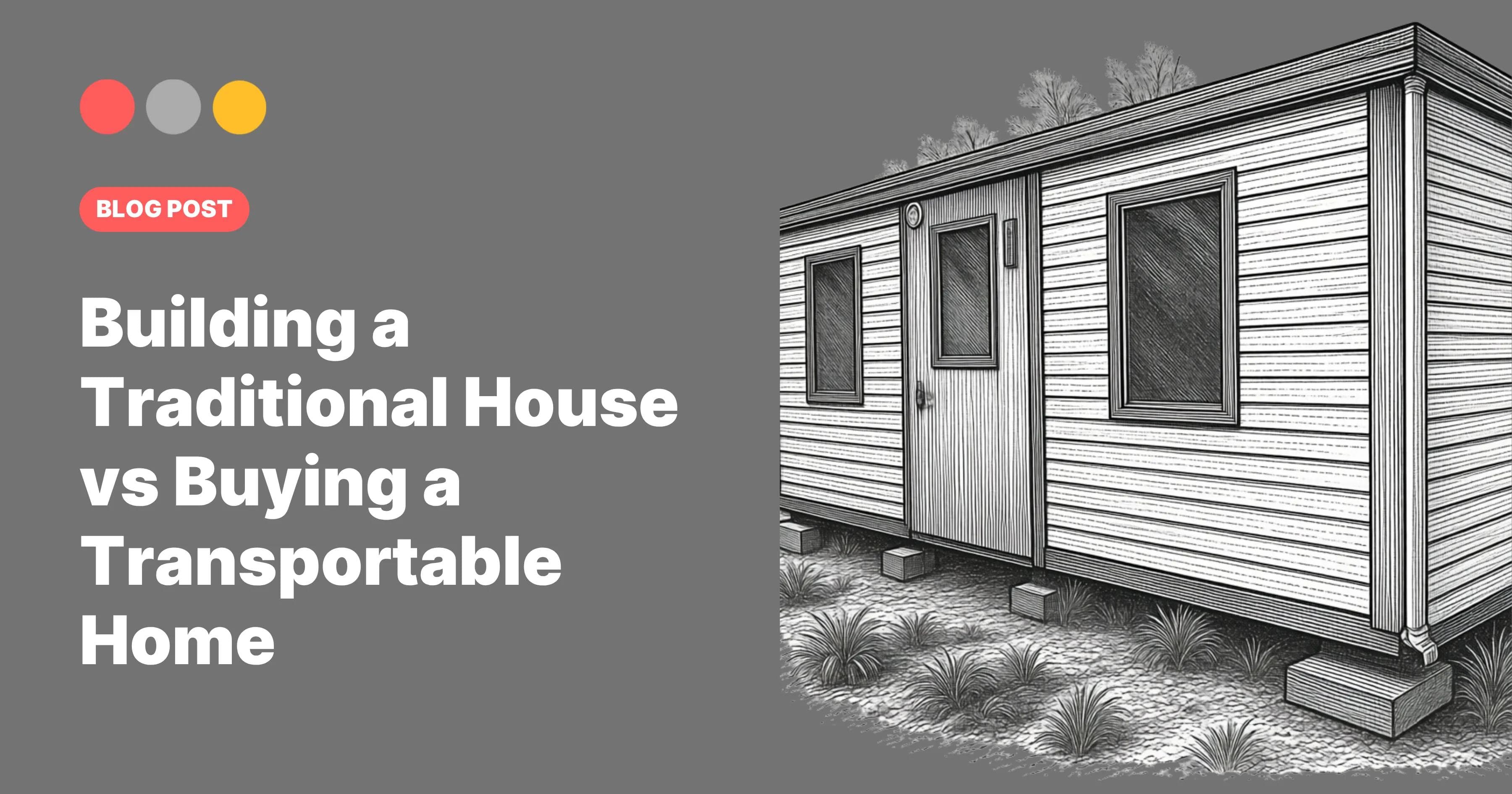
A transportable home is built partly or fully off-site, then delivered and installed on your property. That can shorten timeframes and improve cost certainty, especially when you choose a standard or semi-custom design. It does not remove the need for planning, foundations, and services, but it often changes how the process feels and how much risk sits in the build stage.
When a traditional build may be the better choice
A traditional build often makes more sense if you want a highly customised home and you are prepared for the extra time and complexity that comes with it.
It can be a strong option if:
- You want a one-off design tailored closely to your lifestyle.
- Your section is unusual and needs a highly specific architectural response.
- You have the budget and patience for a longer project timeline.
- You are comfortable managing more decisions throughout the build.
The biggest advantage is flexibility. You can shape the home around your exact goals, whether that means a specific orientation, a unique floor plan, higher-end finishes, or a more complex overall design.
The trade-off is that traditional builds often carry more uncertainty. Weather delays, trade scheduling, material costs, and site conditions can all affect timing and budget. That does not mean a traditional build is a bad choice. It simply means it usually demands more from the homeowner.
When a transportable home may be the better choice
A transportable home often makes more sense when speed, simplicity, and cost control matter more than total design freedom.
It can be a strong option if:
- You want a more predictable build process.
- You need a second dwelling on an existing property.
- You want to reduce the amount of time spent building on site.
- You are happy with a standard or semi-custom layout.
- You want to avoid some of the uncertainty that comes with a fully site-built project.
This is one reason transportable homes have become more appealing in New Zealand. For many buyers, they offer a practical middle ground: a real home with a more streamlined delivery model.
At Portable Building Specialists, this is often where buyers find clarity. Once they compare a long, open-ended traditional build with a transportable option that has clearer pricing, a shorter programme, and established layouts, the decision becomes more practical.
Cost comparison
People often ask whether it is cheaper to build a house or buy a transportable home. The answer depends on what you are comparing.
A transportable home can be more cost-effective when you choose a standard design and the site is reasonably straightforward. Factory-based construction can improve efficiency and reduce some of the unknowns that affect site-built homes.
But neither option should be judged by the headline price alone.
With a traditional build, costs can rise through site challenges, variations, material increases, and extended timelines.
With a transportable home, buyers still need to budget for delivery, foundations, site access, crane work if required, utility connections, and council-related requirements.
So the better question is not, "Which is cheaper on paper?" It is, "Which gives me the best overall outcome for my land, timeline, and budget?"
Timeframe comparison
This is where transportable homes often stand out most clearly.
A traditional build can take many months and sometimes longer, especially if the design is complex or the build is affected by weather, labour shortages, or sequencing delays.
A transportable home can often move faster because the building is produced off-site while parts of the site work are being prepared in parallel. That overlap can make a big difference if timing matters to you.
For buyers who want to move sooner, add a granny flat or secondary dwelling, or reduce the stress of a long build process, that shorter timeline can be one of the strongest advantages.
Control vs convenience
In simple terms, a traditional build gives you more control, while a transportable home often gives you more convenience.
If you care most about complete design freedom, a traditional build may be worth the added complexity.
If you care most about practicality, a faster process, and fewer moving parts, a transportable home may be the better fit.
Neither priority is wrong. The key is to be honest about what you value most.
Questions to ask before deciding
Before choosing one path over the other, ask yourself:
- How much customisation do I really need?
- How important is budget certainty?
- How soon do I need the home completed?
- How complex is my section?
- Am I comfortable managing a long build with multiple trades and variables?
- Would a standard or semi-custom transportable layout meet my needs just as well?
If you can answer those questions clearly, the decision usually becomes far easier.
If you want to compare practical options rather than abstract ideas, it helps to look at real layouts and home types. You can browse our cabins and portable buildings at /cabins to get a better sense of what may suit your property.
Final thoughts
There is no universal winner between a traditional build and a transportable home. The best choice depends on what you value most and what your property realistically allows.
If you want maximum design control and are prepared for a longer, more complex process, a traditional build may be the better path.
If you want a more predictable timeline, clearer cost structure, and a simpler route to a quality home, a transportable home may be the smarter decision.
If you want help weighing up the practical trade-offs, Portable Building Specialists can help you compare layouts, delivery considerations, and site suitability before you commit. Explore our range at /cabins or contact our team at /contact.